
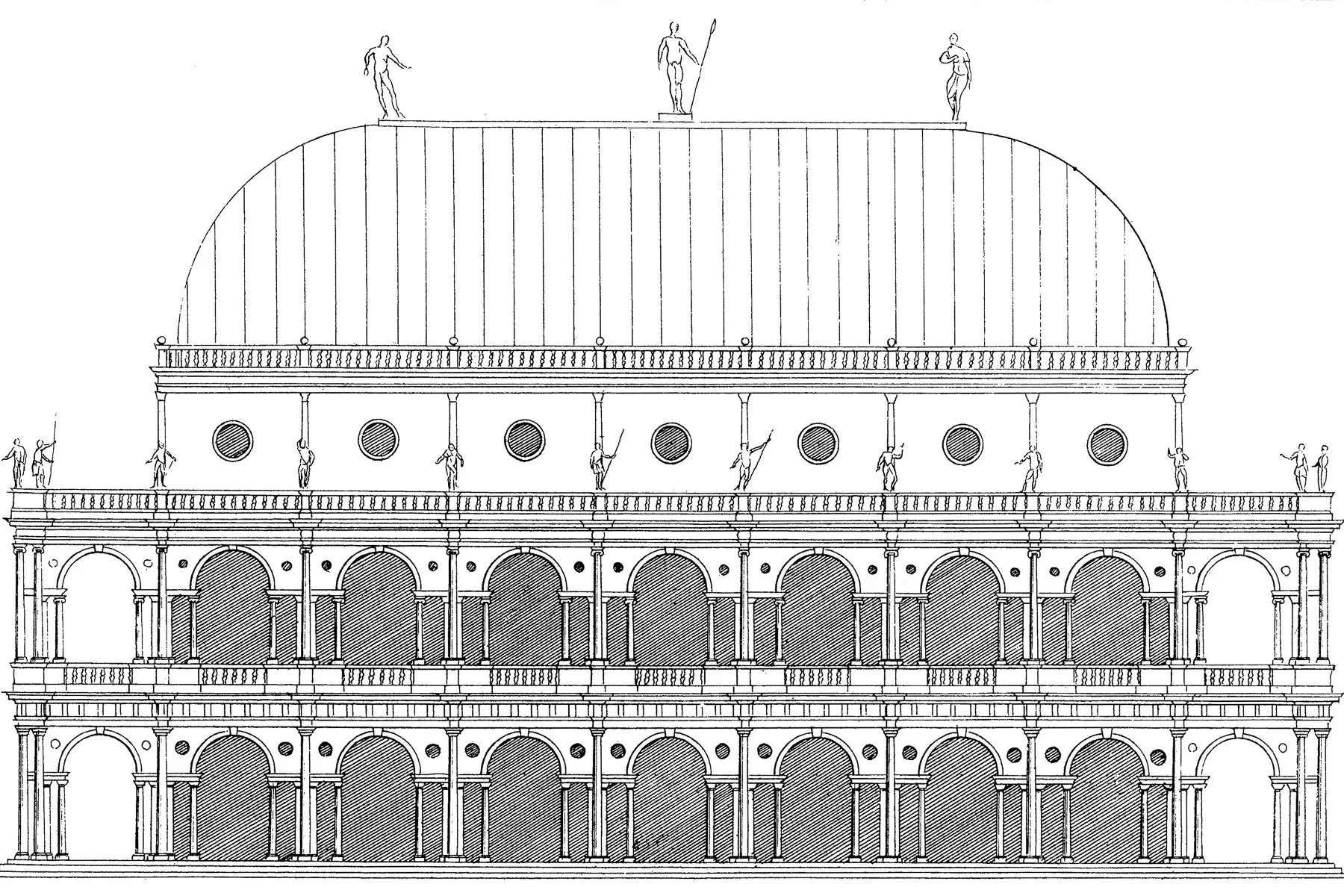
Elevation of Basilica Palladiana
Andrea Palladio, The Four Books on Architecture
THE ARCHITECTURE OF THE RENAISSANCE
An exploration of classical ideals, proportion, and Palladio
The Renaissance marked a rebirth of classical ideals in both the fields of art and architecture. Among its most influential architects was Andrea Palladio (1508-1580) whose careful study and measurement of the ancient ruins of Rome informed a body of work grounded in proportion, symmetry, geometry, and the classical orders. Palladio documented these ideas in his treatise, The Four Books on Architecture, which include his own hand-drawn plans, sections, and elevations of his villas, palazzos, and civic structures in the Veneto region of Italy.
Through the study of Palladio’s drawings of his villas and palazzos, students learned to analyze a building spatially—identifying relationships of geometry, symmetry, proportion, rhythm, and solid and void. Using trace paper over prints of Palladio’s plans and elevations, students diagrammed these relationships as a way of uncovering the elements of design.
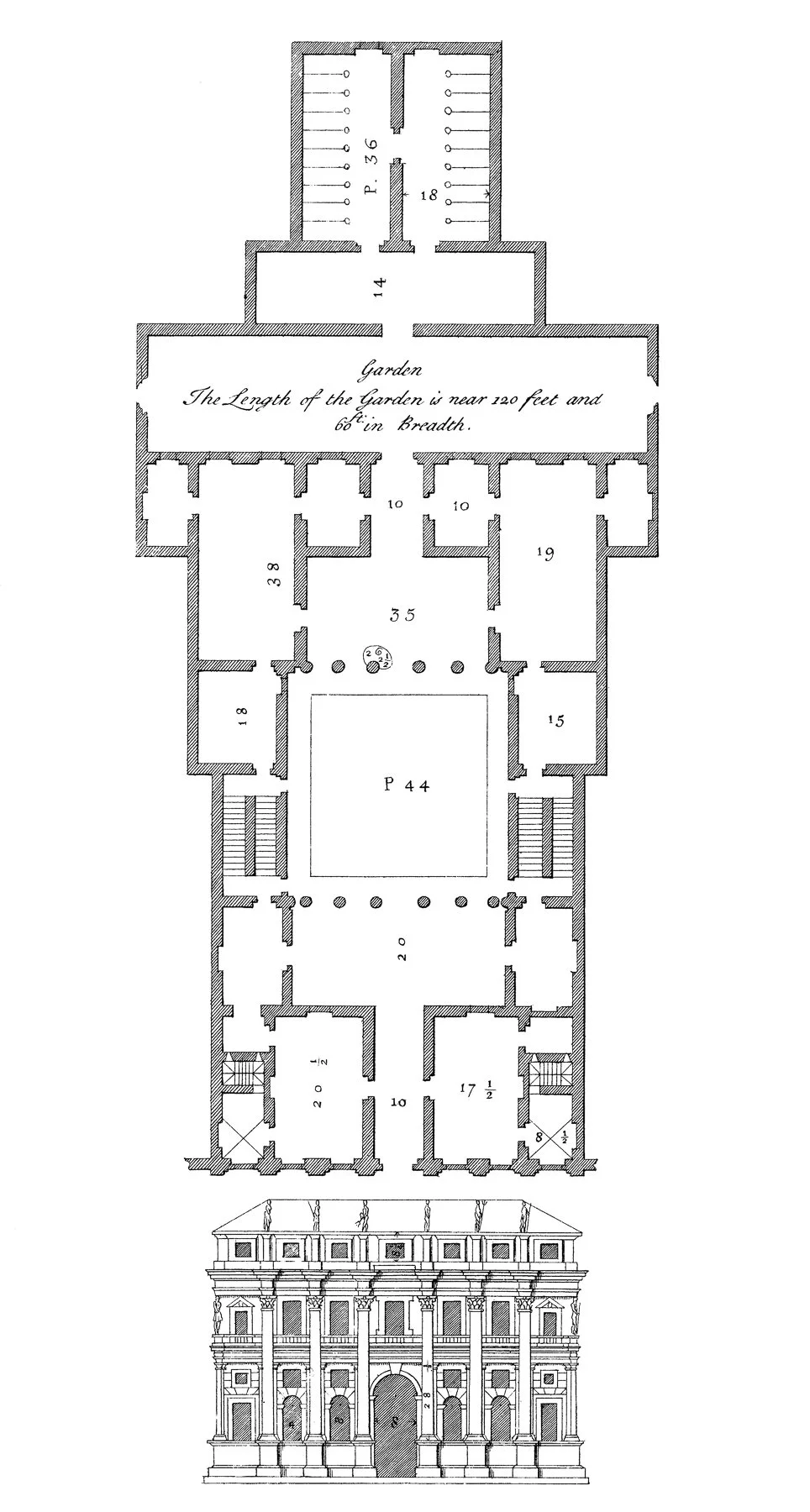
Palazzo Valmarana Andrea Palladio
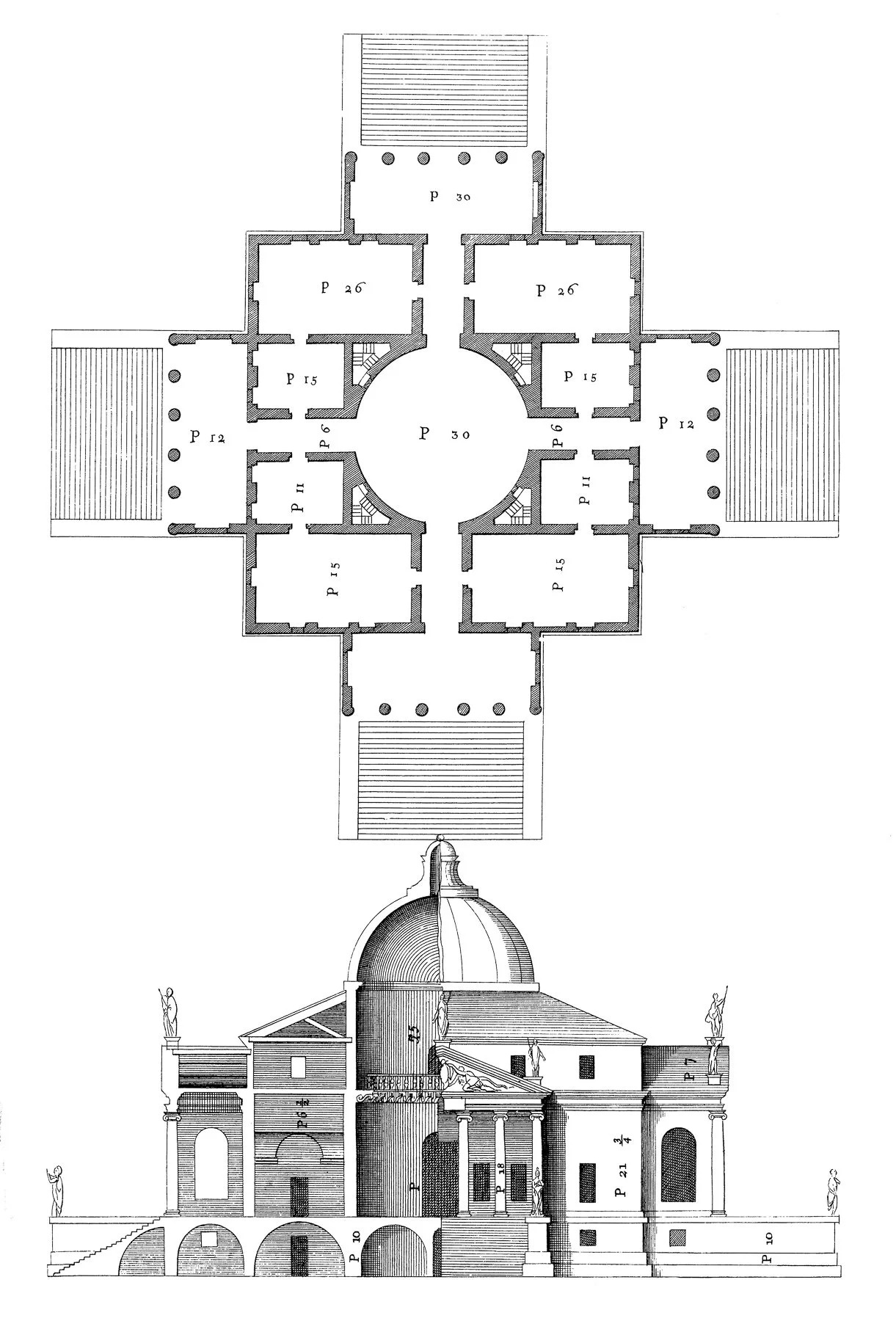
Villa Rotunda Andrea Palladio
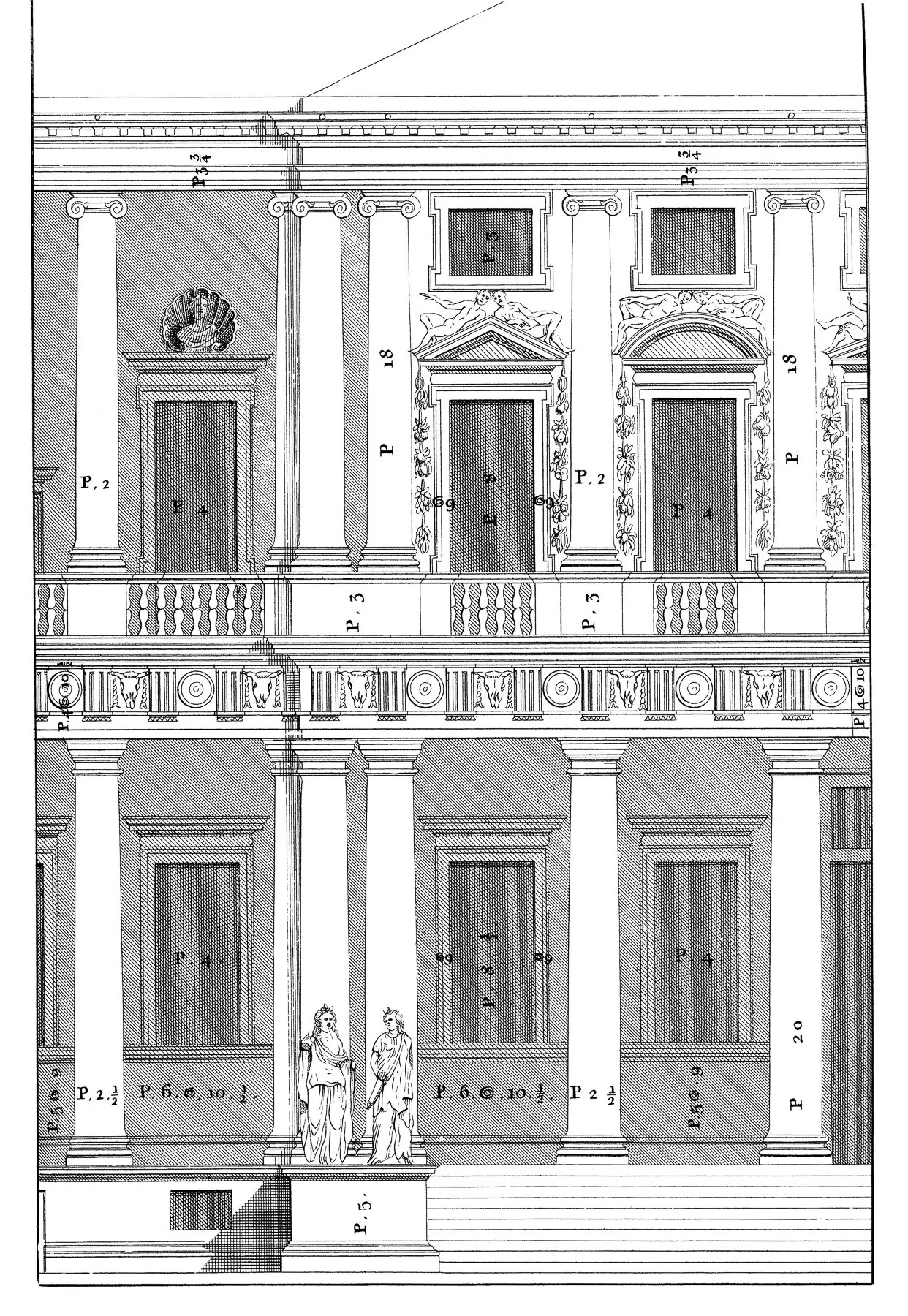
Palazzo Chiericati Andrea Palladio
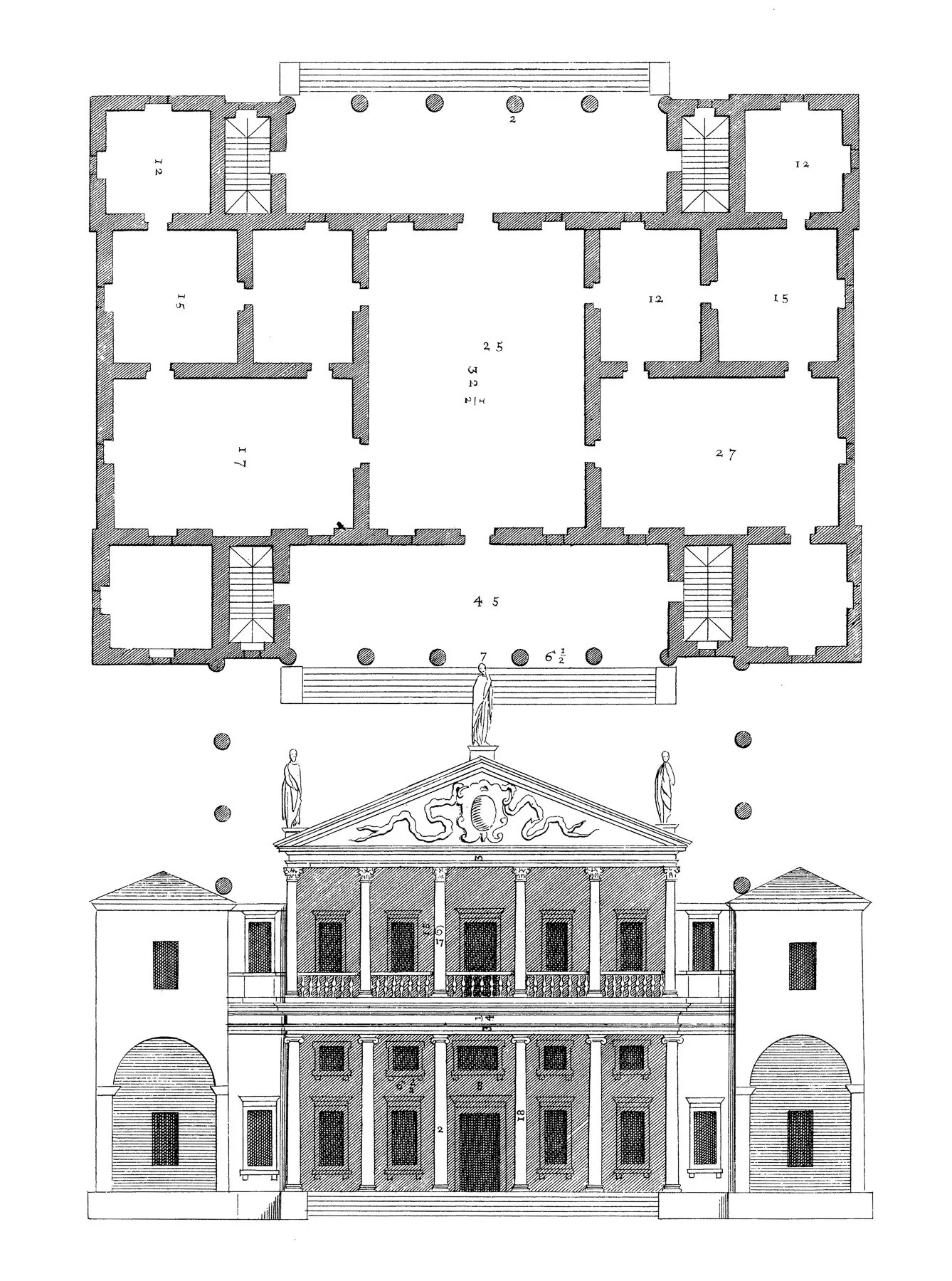
Villa Valmarana Andrea Palladio
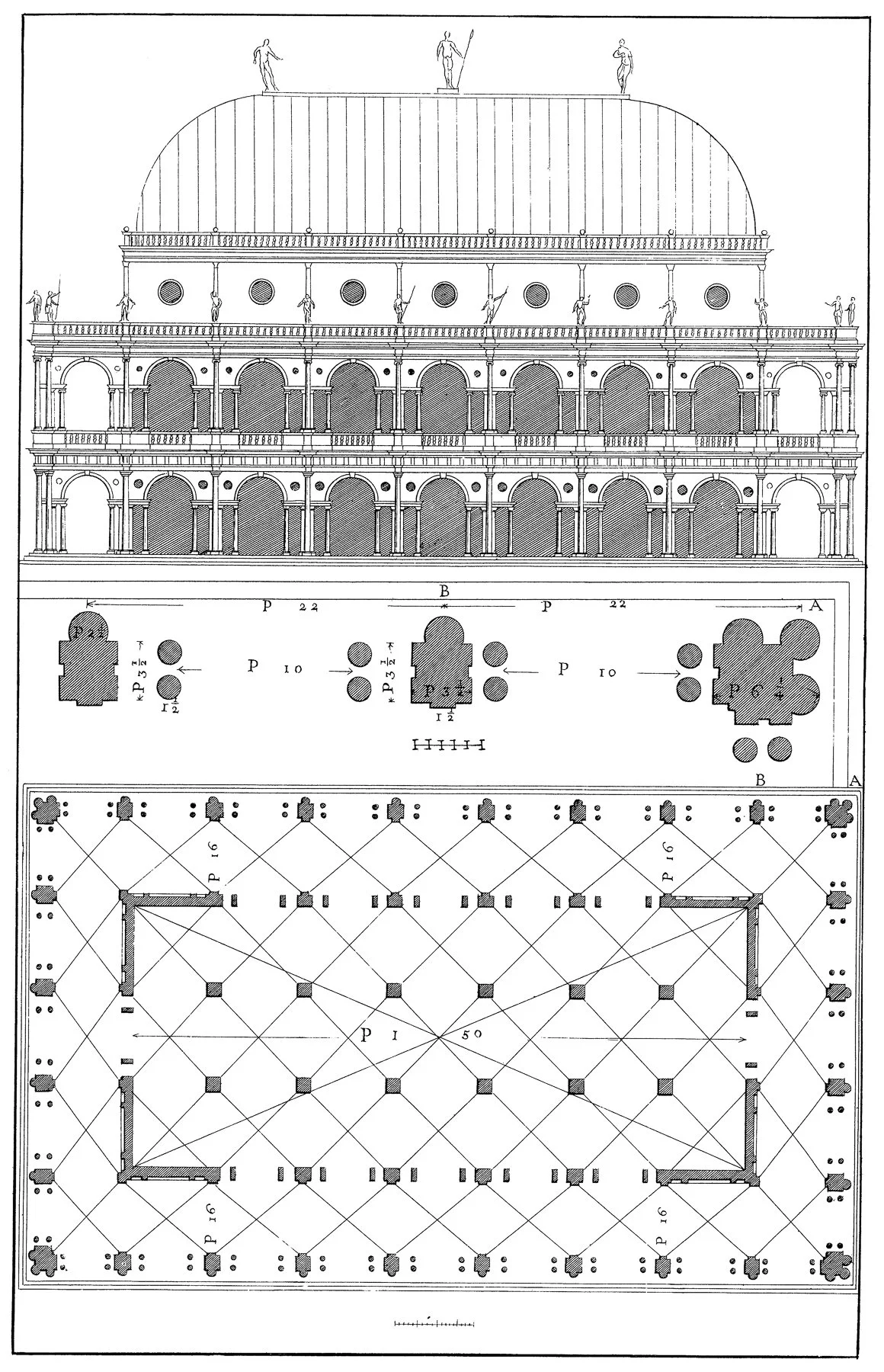
Basilica Palladiana Andrea Palladio
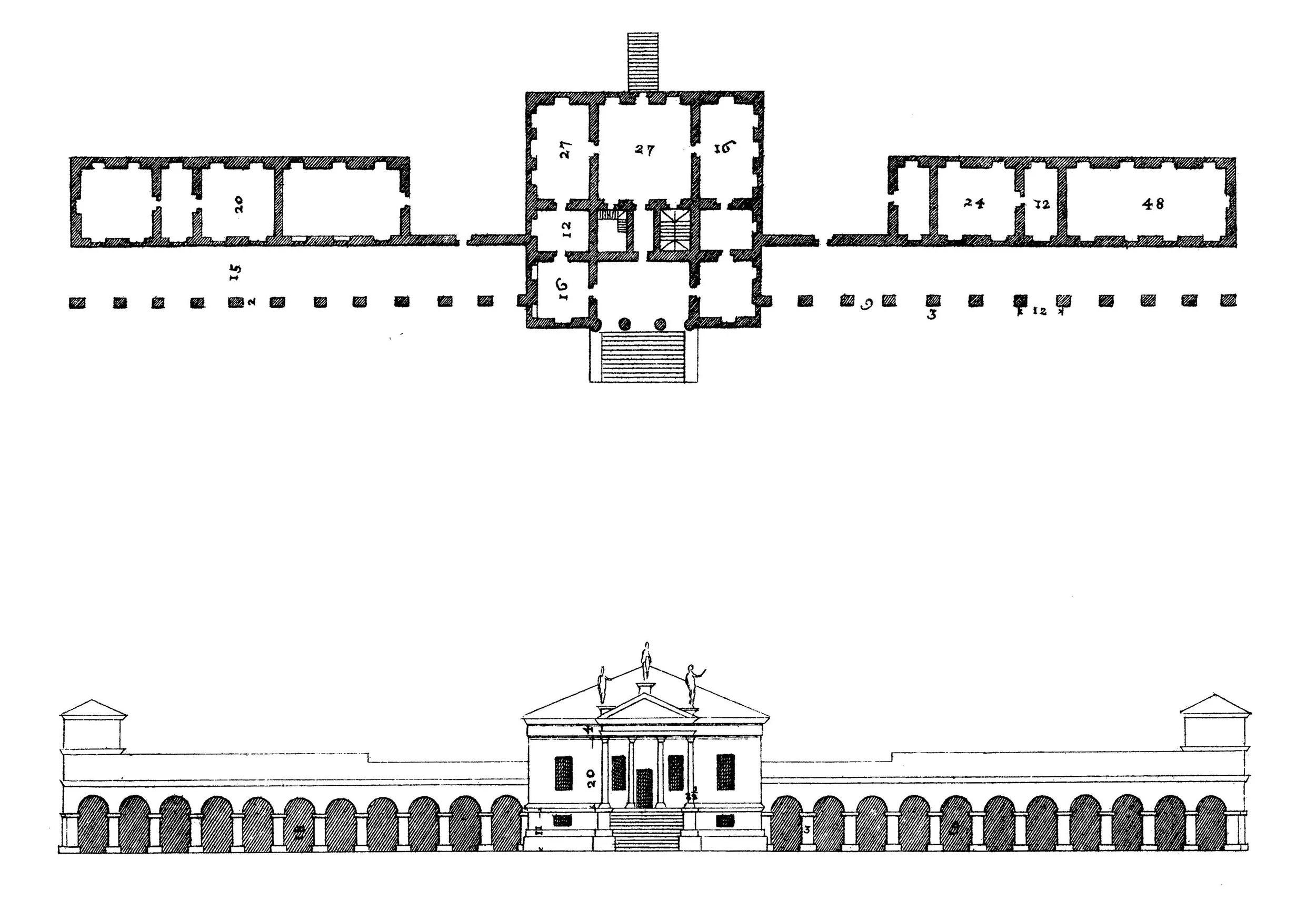
Villa Emo Andrea Palladio
INFLUENCES & RESOURCES
Andrea Palladio, The Four Books on Architecture