
Architectural Lectures & Workshops
theartshelf.com
The Classical Orders
The Classical Orders were proportioning systems devised by the ancient Greeks and Romans to give their buildings order, proportion, symmetry and visual harmony.
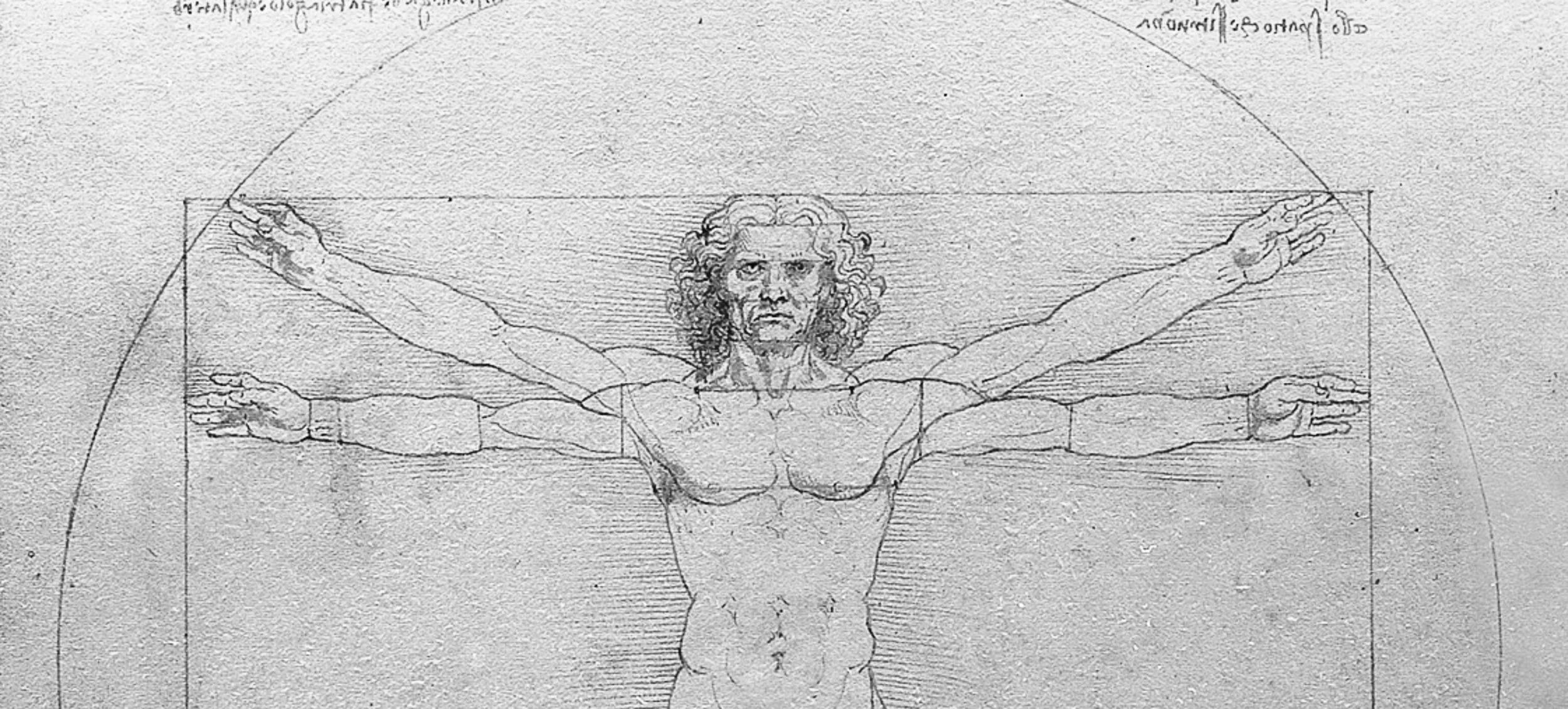
In search of a proportioning system to apply to the design of temples, the ancient Greeks looked to the human figure for inspiration. They found that the human body is proportional to itself, and that these proportions gave the body a sense of order, harmony and beauty. Wanting their temples to also be beautifully designed, they imitated the proportions of the human body in their designs.
Marcus Vitruvius, a first century architect and engineer, observed these systems in the temples in Greece and Rome, and wrote about them in his treatise, The Ten Books of Architecture. Centuries later, during the Renaissance era, architect Vignola codified the Orders. As a result, the systems of the Classical Orders have endured even until today.
This workshop takes an in-depth look at the Classical Orders, beginning with their unit of measure: the diameter of the column. The diameter of the column provided a standard unit of measure that established all the dimensions of the temple building, from the height of the column, to the minute ornamental details of the capital and entablature. This system of measure could be applied to any size or scale of building as long as the internal relationship between the module and the parts of the building remain constant.
There are five classical Orders. The Greeks invented the Doric, Ionic and Corinthian Orders and the Romans contributed the Tuscan and Composite. In The Ten Books on Architecture, Vitruvius described the inspiration for the Doric Order as the body of a “well-shaped man” (Vitruvius). Of all the Orders, the Doric Order appears the simplest and least ornate. Its proportions have been designed to produce a building with the greatest possible strength without excluding refinement. It was designed to be used for buildings that demand great solidity (Vitruvius).
Students also become familiar with sections of Andrea Palladio’s treaty, The Four Books on Architecture, and label worksheets on the Tuscan, Doric, Ionic, Corinthian and Composite Orders. This exercise highlights the parts of an order: the column, shaft, the base, and capital; and the parts of the entablature, frieze, and cornice.
To illustrate the application of the Classical Orders, the course surveys important architectural buildings designed within each Classical Order. The survey begins with ancient architecture, and includes important Renaissance, modern and post-modern examples.
At the end of the survey, students will be able to recognize the parts of the Classical Orders and identify from memory the orders of important architectural buildings. Much of the important federal buildings of the United States have been built in the classical style, utilizing the Doric, Ionic, Corinthian, Tuscan and Composite Orders to give our government buildings a timeless sense of beauty, strength and permanence.
This interactive exercise measuring the labeling the parts of the Classical Orders gives students an in-depth look at the proportioning system of the Orders. No rulers are needed. All measurements come from the diameter of the column shaft.
Classical Orders Student Worksheets
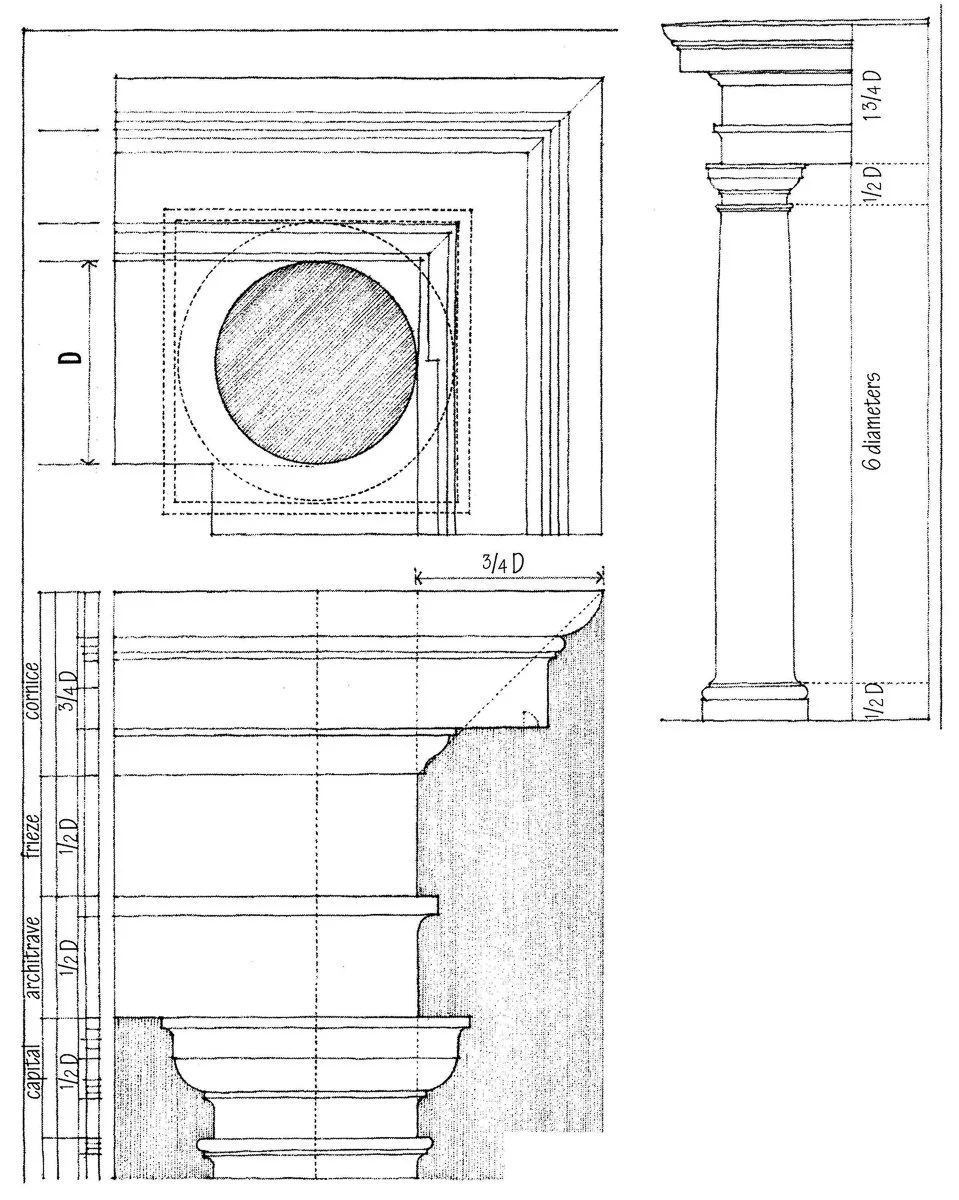
The Tuscan Order Ching: Form, Space & Order
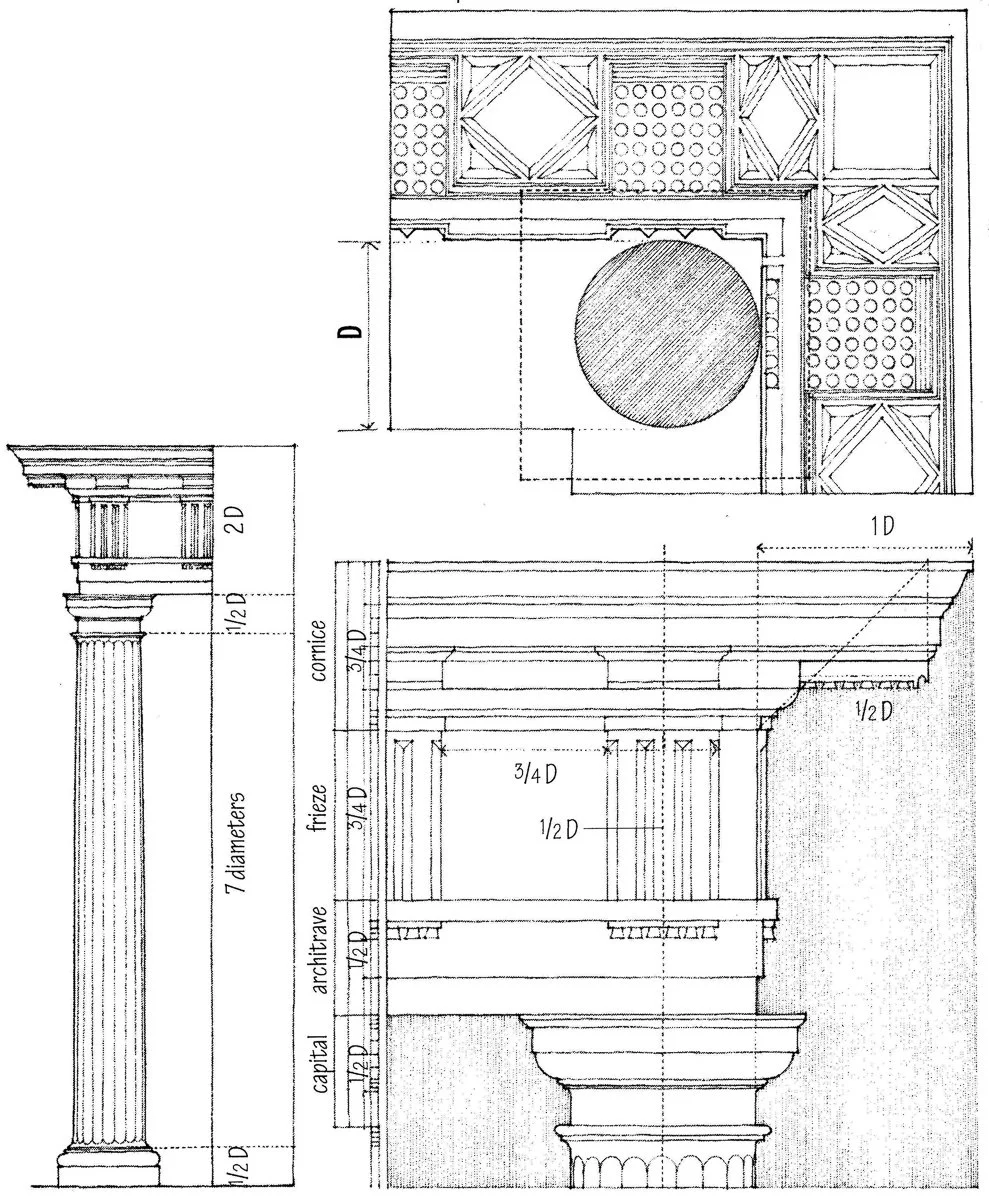
The Doric Order Ching: Form, Space & Order
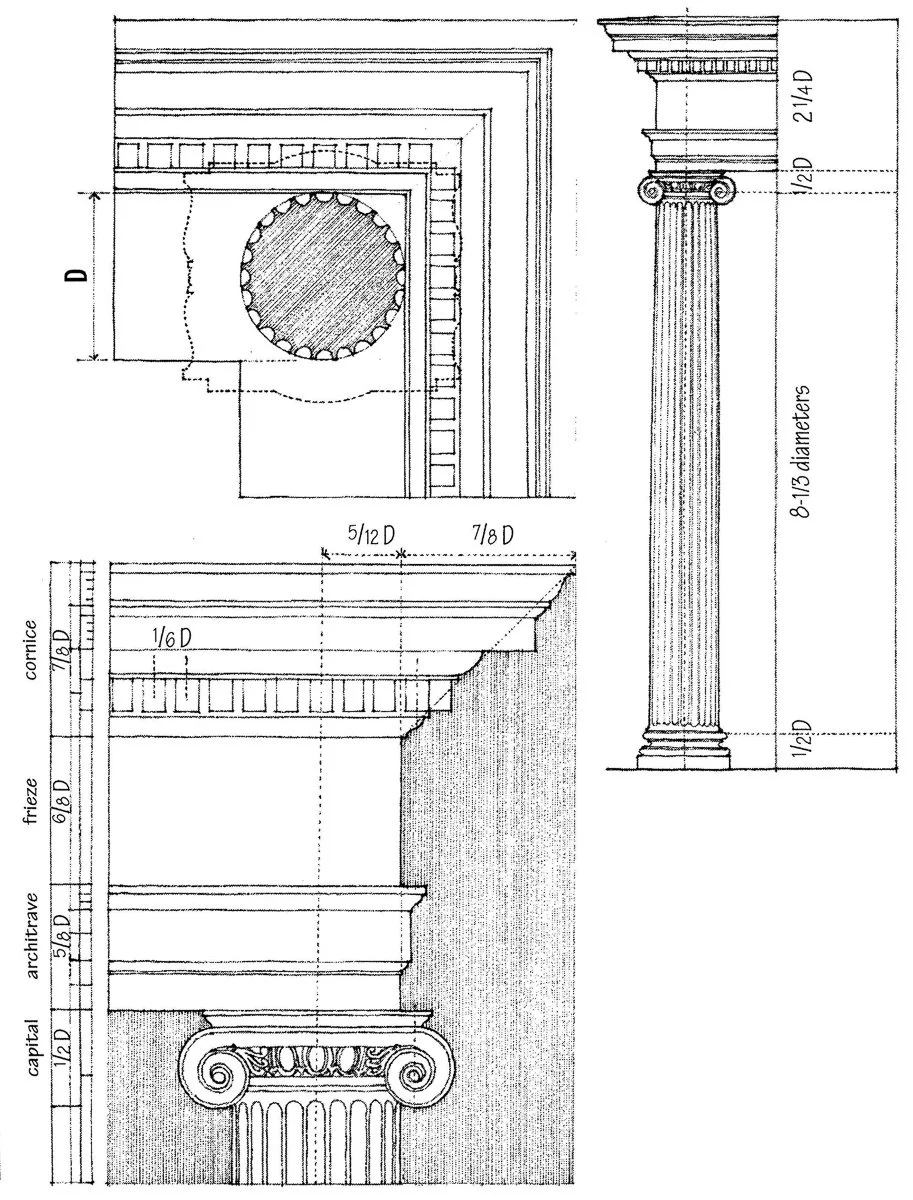
The Ionic Order Ching: Form, Space & Order
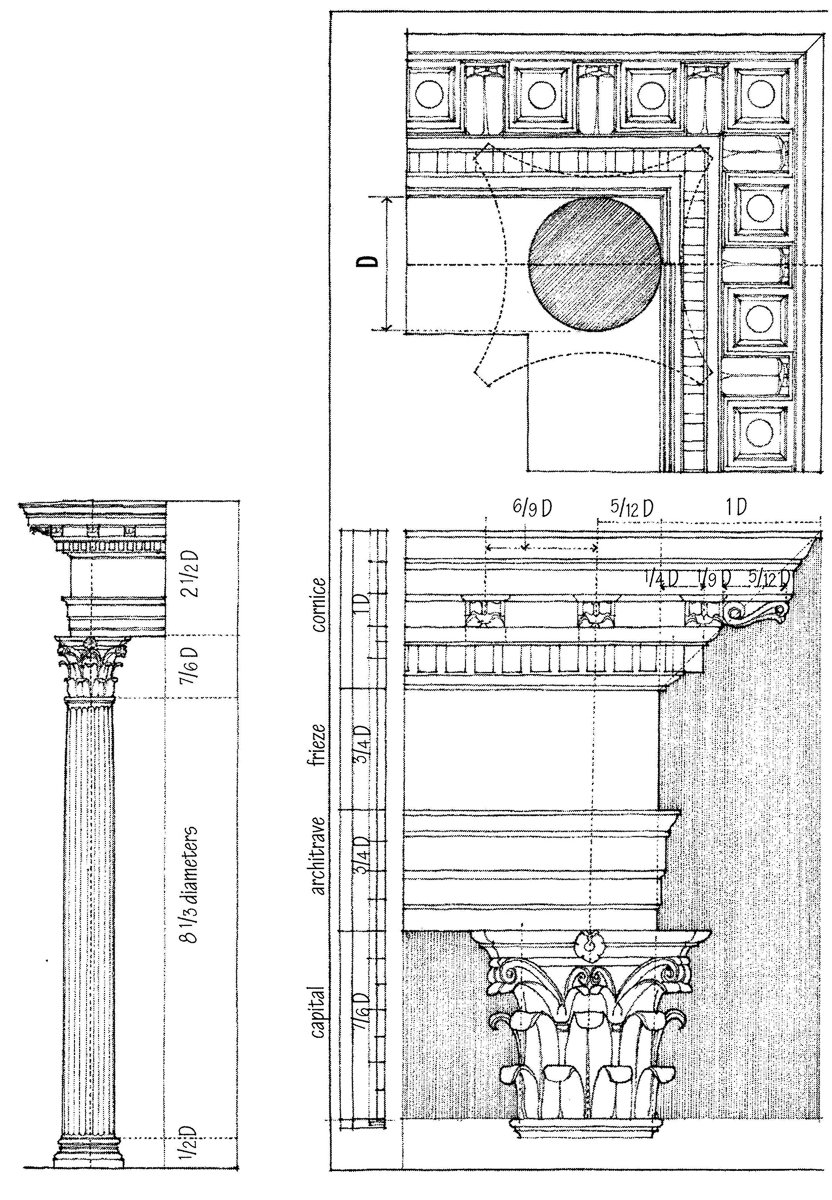
The Corinthian Order Ching: Form, Space & Order