
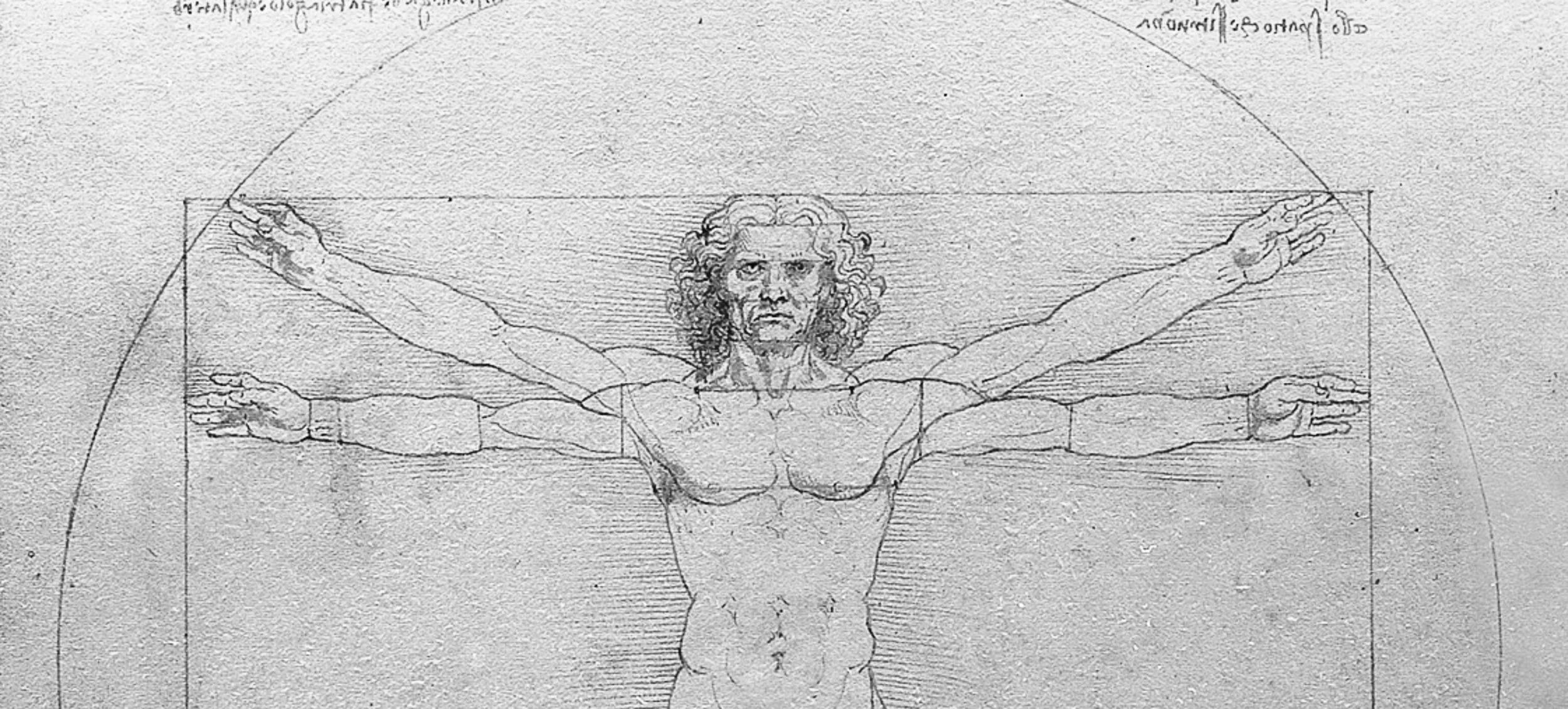
Leonardo da Vinci, Vitruvian Man—a study of proportion and the human figure
THE CLASSICAL ORDERS
An exploration of proportion, the human figure, and the language of classical design
The Classical Orders are systems of proportion that have shaped the language of Western architecture for more than two thousand years. Developed by the ancient Greeks and Romans, they establish a relationship between the column, entablature, architectural detail, and the building as a whole.
In his treatise, The Ten Books on Architecture, Vitruvius connected architectural proportion to the proportions of the human body, an idea illustrated centuries later in Leonardo da Vinci’s The Vitruvian Man.
Within the Classical Orders, the diameter of the column shaft serves a module from which the dimension of the other architectural elements can be derived—from the height of the column to the ornamental details of the capital and entablature. This system of measure allows proportional relationships to remain consistent across changes in scale.
The Greeks developed the Doric, Ionic, and Corinthian Orders, while the Romans added the Tuscan and Composite. During the Renaissance, architects including Vignola and Palladio codified these ancient systems of proportion through measured drawings, extending the language of classical architecture into subsequent centuries.
STUDENT STUDIES
Using the diameter of the column as a module, students measured and analyzed proportional relationships within the Classical Orders.
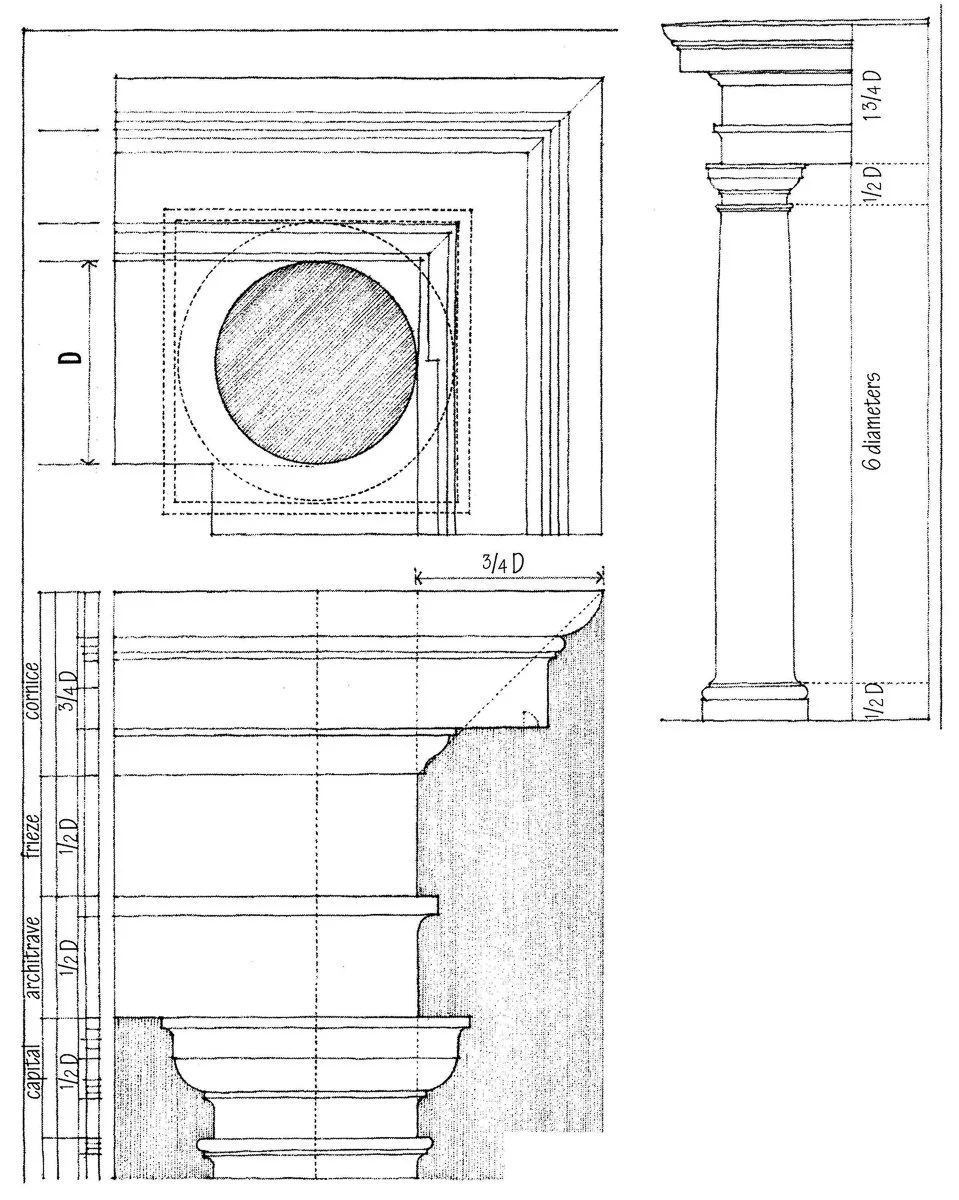
The Tuscan Order Ching: Form, Space & Order
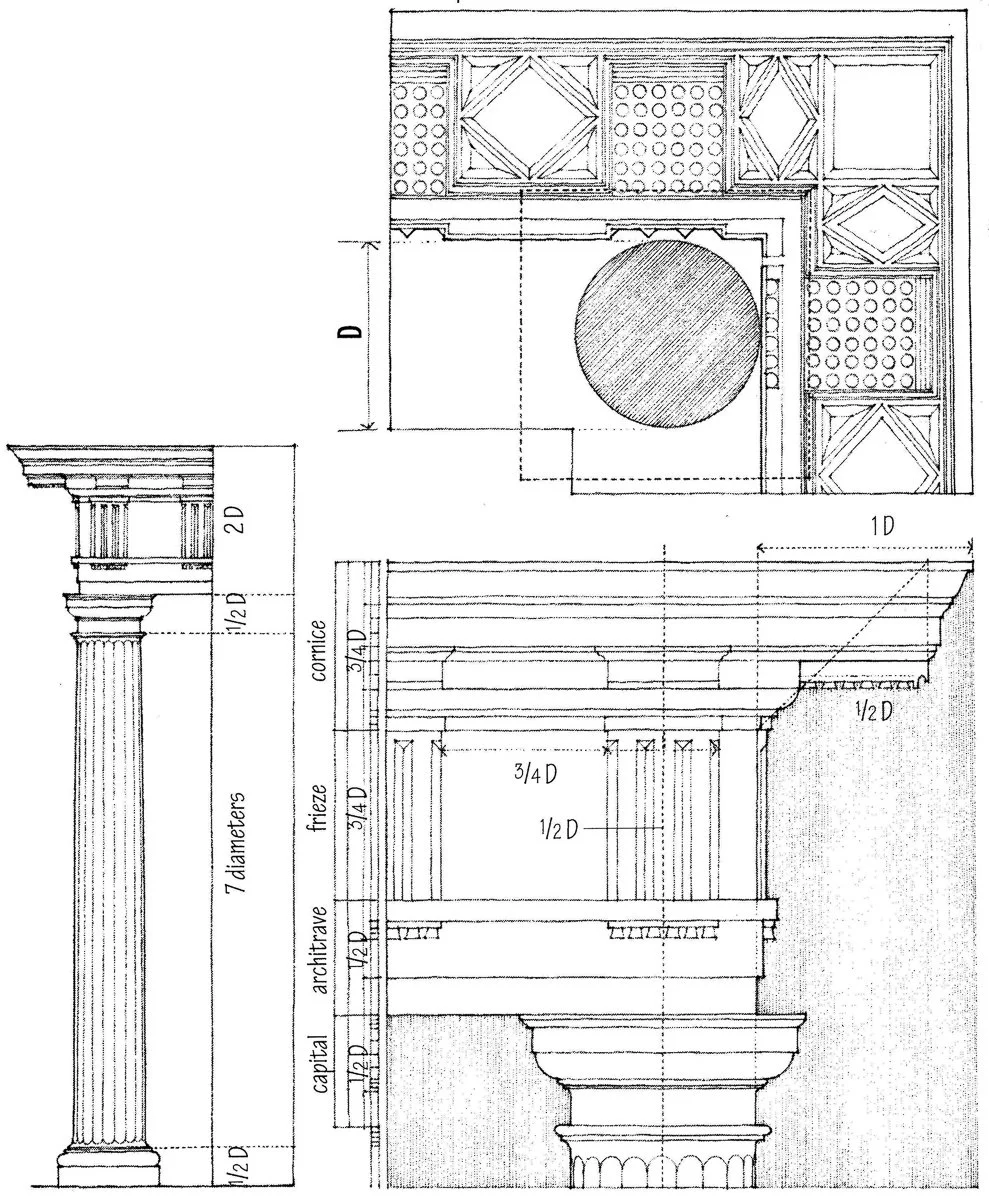
The Doric Order Ching: Form, Space & Order
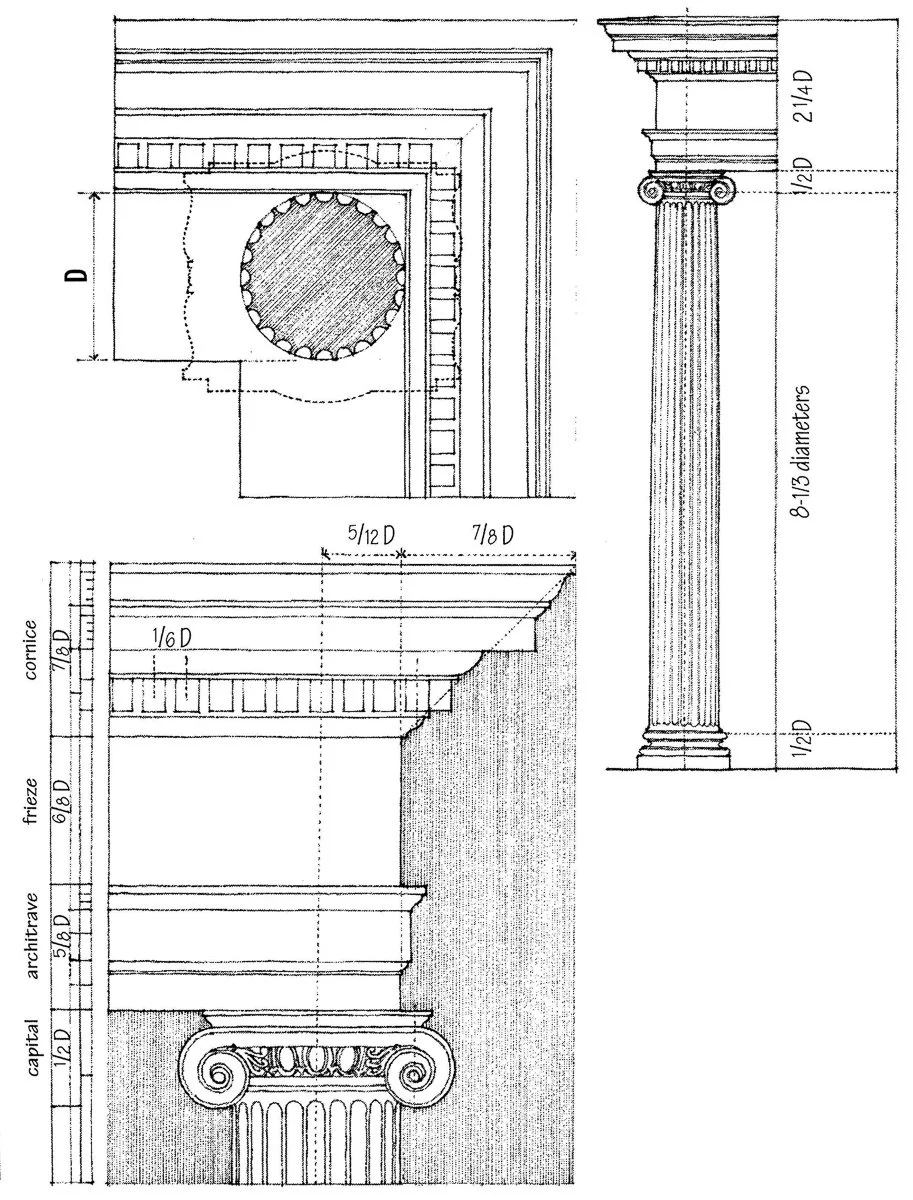
The Ionic Order Ching: Form, Space & Order
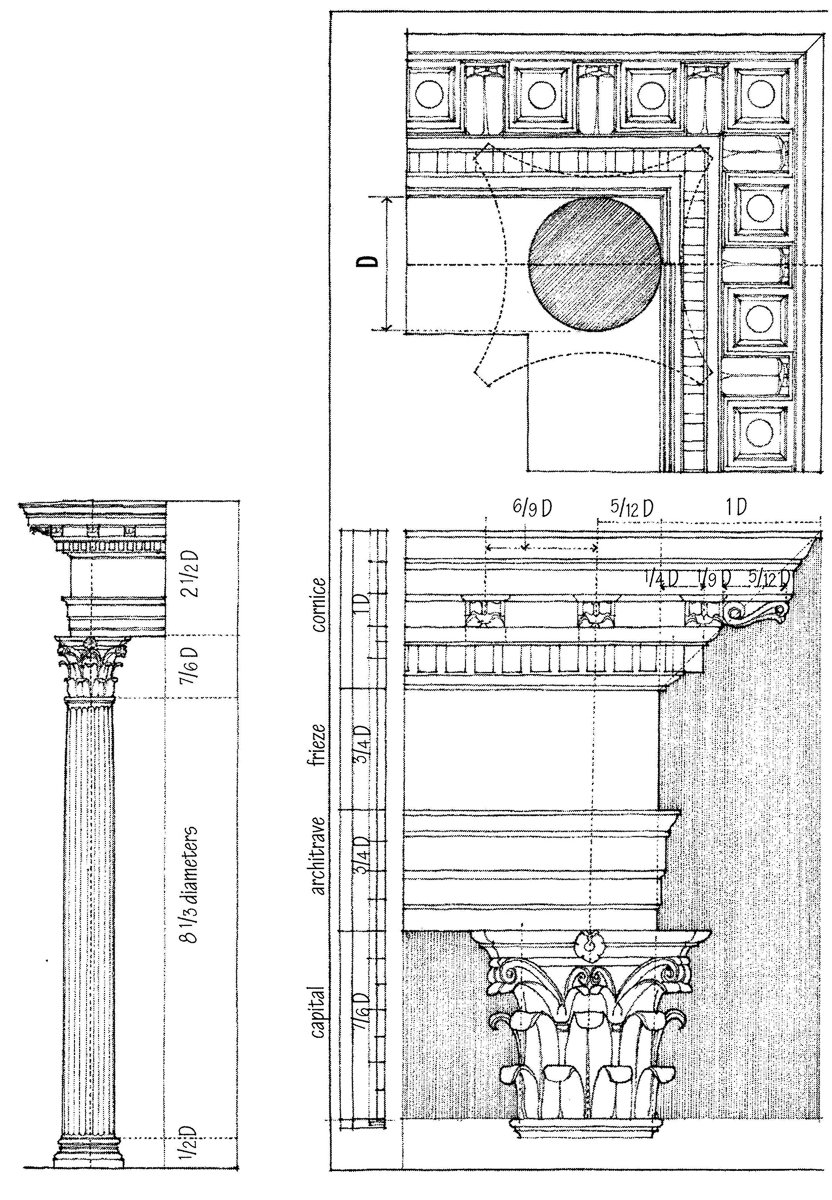
The Corinthian Order Ching: Form, Space & Order
INFLUENCES& SOURCES
Vitruvius, The Ten Books on Architecture
Andrea Palladio, The Four Books on Architecture
Giacomo Barozzi da Vignola, Canon of the Five Orders of Architecture
Francis D. K. Ching, Architecture: Form, Space, & Order